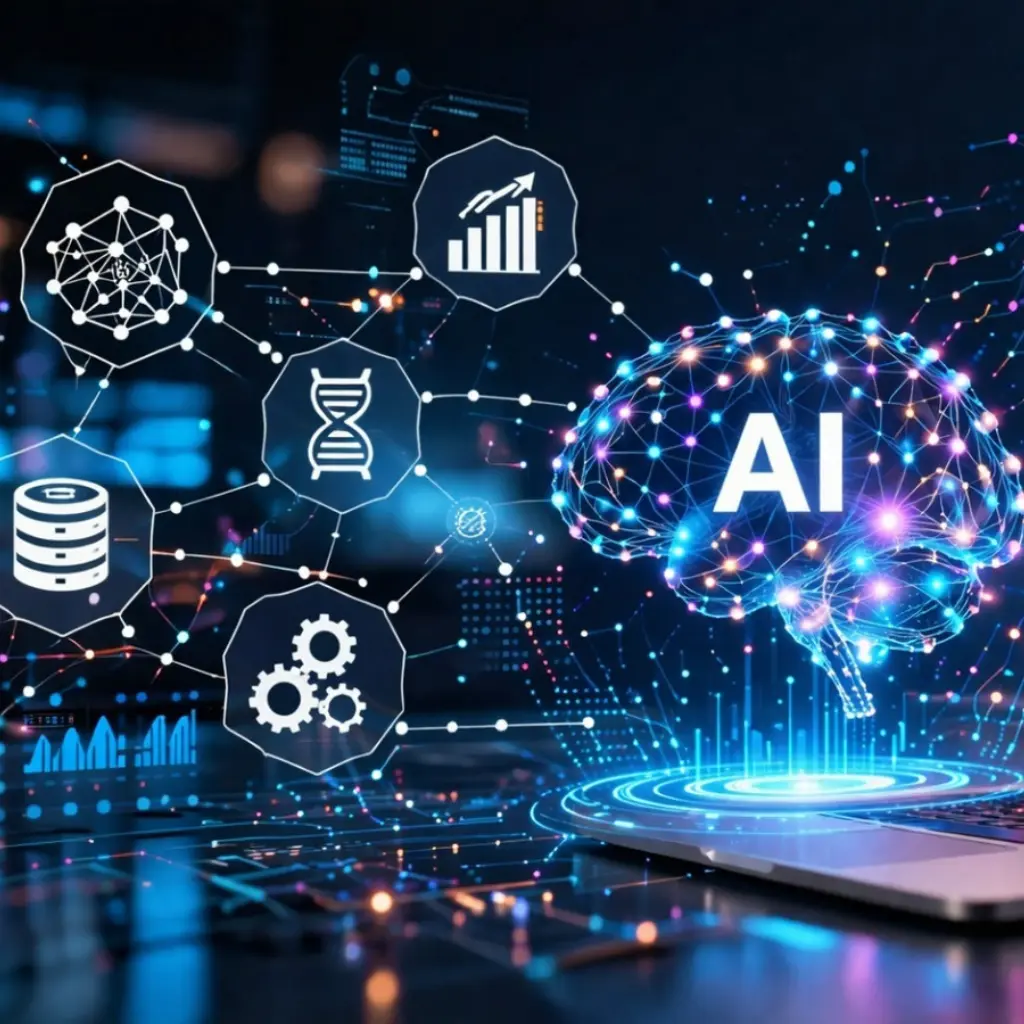
The B.Tech. Artificial Intelligence and Machine Learning programme is a four year undergraduate course designed to prepare students for the rapidly evolving field of intelligent technologies. The programme focuses on building strong foundations in computer science along with advanced knowledge in artificial intelligence, machine learning, deep learning, and data-driven systems.
The curriculum covers key areas such as programming, data structures, algorithms, artificial intelligence, machine learning, deep learning, natural language processing, and computer vision. Students gain hands-on experience through laboratories, real-time projects, internships, and research activities. The programme emphasizes analytical thinking, innovation, and problem-solving to develop intelligent solutions for real-world applications.


Strong foundation in computer science and AI/ML technologies

Focus on machine learning, deep learning, NLP, and computer vision

Hands-on, project-based, and experiential learning approach

Modern labs with AI and machine learning tools
Internship, industry collaboration, and research opportunities
Emphasis on innovation, design thinking, and problem-solving
Flexible electives in emerging AI technologies
Skill development aligned with industry and future trends
Graduates of this programme are prepared for diverse and high-demand roles across industries such as IT, healthcare, finance, robotics, and automation.
Career Roles Include:
AI Engineer
Machine Learning Engineer
Data Scientist
AI Researcher
Computer Vision Engineer
NLP Engineer
The B.Tech. in Artificial Intelligence and Machine Learning is a four-year program divided into eight semesters, comprising a total of 160 credits. The curriculum includes a balanced mix of core courses, electives, laboratory work, and project-based learning, designed to progressively build students’ technical knowledge and practical skills.
Semesters 1 & 2: Foundation Category: This component provides a strong foundation in mathematics and basic sciences, enabling analytical thinking and problem-solving essential for AI and machine learning applications. It integrates fundamental concepts of electrical, electronics, and mechanical engineering to support interdisciplinary understanding. Students also develop programming skills for problem solving using structured and algorithmic approaches. Additionally, engineering graphics enhances design visualization, while communication skills prepare students for effective collaboration and professional practice in AI and ML domains.
Semesters 3 & 4: Core Computing Category: Builds core computing knowledge through data structures, algorithms, and object-oriented programming for efficient software development. Covers computer organization and operating systems to understand system-level operations, while discrete mathematics and probability provide the mathematical basis essential for algorithm design, machine learning, and intelligent systems.
Semesters 5 & 6: AI & ML Core Category: Focus on advanced AI and machine learning technologies, including artificial intelligence, data analytics, deep learning, natural language processing, and computer vision. Enables students to develop intelligent systems capable of learning, perception, and decision-making. Practical exposure is provided through mini projects, internships, and skill development activities, preparing students to build innovative, real-world AI solutions.
Semesters 7 & 8: Advanced & Specialization Category: Focus on advanced AI techniques and intelligent systems, including reinforcement learning and advanced deep learning for complex problem-solving. Students explore emerging technologies through professional electives and gain practical industry exposure via internships and training. The programme culminates in a capstone project, enabling students to design and develop innovative AI-driven solutions for real-world applications.


Candidates seeking admission to the B.Tech. programs must have successfully completed their 10+2 / Intermediate or equivalent examination from a recognized board with Physics, Mathematics, and Chemistry (or relevant subjects), securing a minimum of 60% aggregate marks in the qualifying examination.

Admissions will be based on merit in the qualifying examination and/or performance in recognized national or state-level entrance examinations, such as Joint Entrance Examination (JEE) or relevant State Common Entrance Tests, as per the admission guidelines of the University.
| Students Under Indian Category | ₹ Per Annum |
|---|---|
| Academic Fees | ₹ 3,00,000 |
| Hostel Fees (2 Sharing Includes Room & Mess Charges) |
₹ 1,50,000 |
| Hostel Fees (4 Sharing Includes Room & Mess Charges) |
₹ 1,25,000 |
| Caution Deposit (Refundable at the End of the Course or After Graduation) |
₹ 20,000 |
| Students Under NRI/PIO/FO Category | $ USD Per Annum |
|---|---|
| Academic Fees | $5000 |
| Hostel Fees (Includes Room & Mess Charges) |
$2500 |
| Caution Deposit (Refundable at the End of the Course or After Graduation) |
$400 |
Note:
Hostel stay is Mandatory for students and fees are subject to revision every year
Refund Rules:
Fee refund & cancellation policy will be as per guidelines published by UGC/Statutory authorities.


Note:
Dates and schedules are subject to change.


Kaveri University was established as per the Telangana Private Universities (Establishment & Regulation) Act, 2018 under section 3.