PG Programme (Plant Physiology)

...

Programme Overview

The university offers a specialized postgraduate programme (M.Sc. & Ph.D.) in Plant Physiology, designed to develop experts capable of understanding, analyzing, and enhancing the functional processes that govern crop growth, development, productivity, and resilience. This programme integrates advanced academic training with experiential learning, ensuring that students gain a comprehensive understanding of plant functioning under diverse environmental and management conditions.

A unique strength of the programme is its strong industry and R&D collaboration with Kaveri Seed Company, providing students with direct exposure to physiological screening, stress tolerance evaluation, seedling vigour analysis, canopy assessment, and field-based physiological research aligned with real-time breeding and agronomic trials. The curriculum further incorporates training in molecular studies of abiotic stress tolerance, including gene expression and stress signalling pathways; crop modelling for predicting growth and yield under climate variability; nutritional physiology in both field and hydroponic systems; and hormonal studies related to growth regulation and stress adaptation.

The curriculum covers both classical and modern physiological domains, including photosynthesis, respiration, nutrient uptake, stress physiology, hormone biology, crop productivity analysis, and modern phenomics. These are supported by advanced facilities such as growth chambers, gas exchange analysis systems, chlorophyll fluorescence analyzers, plant nutrient analyzers, soil–plant–water monitoring tools, and controlled-environment labs.

Global collaborations with research institutes and international universities further enhance learning through joint projects, training workshops, and exposure to emerging global trends such as climate-smart physiology, high-throughput phenotyping, and plant-environment interactions.

With a strong emphasis on innovation, sustainability, and climate-resilient agriculture, the postgraduate programme in Crop Physiology at Kaveri University prepares graduates for leadership roles in research, academics, agri-tech industries, and national and global agricultural organizations.

Our Vision

To develop globally competent crop physiology professionals who understand the mechanisms underlying crop growth and resilience, and who can contribute to sustainable agricultural advancement.

To strengthen scientific research by integrating modern physiological tools, controlled-environment studies, and field-based phenotyping for improved crop productivity under climate variability with emphasis on biotic and abiotic stress tolerance.

To foster national and international collaborations that provide students with comprehensive theoretical and practical exposure, enabling them to be future-ready professionals in agricultural sciences.


Programme Highlights

Intensive curriculum covering plant growth processes, stress physiology, crop productivity, and climate-resilient agriculture, with a strong emphasis on physiological breeding, crop growth simulation, and improving resource-use efficiency.

Access to advanced physiological research facilities including infrared gas analyzers (IRGA), SPAD meters, canopy sensors, growth chambers, pressure chambers, and soil moisture monitoring systems.

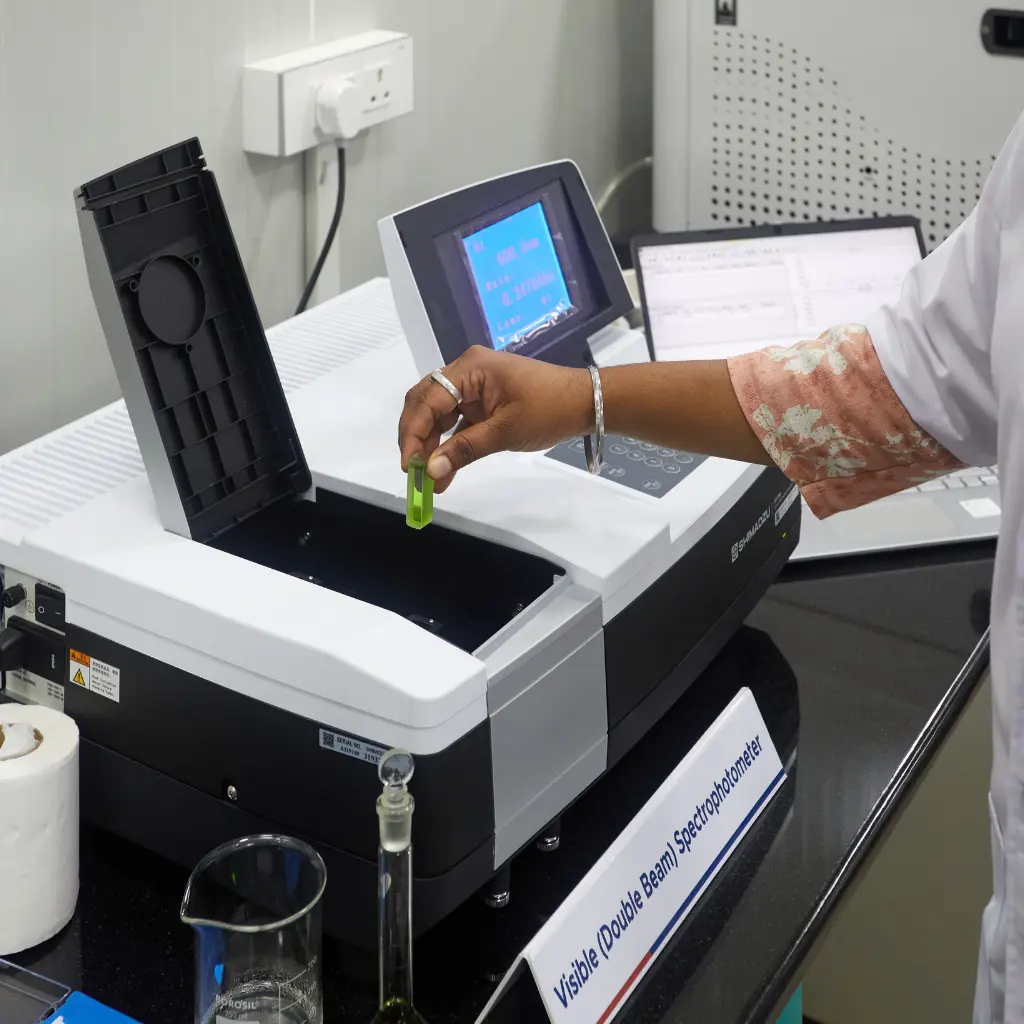
Hands-on experience in biochemical analysis using advanced equipment, including spectrophotometers, fluorometers, enzyme activity analyzers, and metabolite profiling systems for assessing stress biomarkers, antioxidants, pigments, and metabolic responses.

Training in modern physiological tools such as chlorophyll fluorescence, remote sensing-based physiological assessments, and phenomics.

Industry collaboration with Kaveri Seed Company enabling real-world exposure to physiological screening, stress assays, and performance evaluation.

Career-oriented training preparing students for opportunities in research institutions, agri-biotech companies, seed sectors, and academic roles.

Exposure to global research trends through seminars, exchange programmes, and collaborative projects.

Curriculum Overview

Covers advanced crop physiology topics including Plant Growth and Development, Photosynthesis and Productivity, Stress Physiology, Water and Nutrient Relations, Hormone Biology, Seed Physiology, Crop Modelling, Phenomics, and Climate-Resilient Agriculture.

Duration:

M.Sc.: 2 years (4 semesters)

Ph.D.: 3 years (6 semesters)

Objectives:

To impart in-depth knowledge of plant physiological processes related to growth, development, and yield formation.

To train students in the study of stress physiology, plant-water relations, nutrient dynamics, and photosynthesis.

To develop skills in instrument-based analysis, including chlorophyll meters, IRGA, porometers, and growth chambers.

To promote research in physiological breeding, crop growth simulation, and resource-use efficiency.

To prepare students for interdisciplinary roles in research, extension, and AgriTech-based crop advisory systems.

To foster innovation in enhancing climate adaptability and improving the physiological efficiency of crops under diverse agro-ecological conditions.

Programme Structure

Kaveri University's School of Agriculture offers a comprehensive Postgraduate Programme in Crop Physiology, emphasizing advanced scientific learning, practical experimentation, and innovative approaches to understanding plant function. The programme is designed to build strong conceptual and technical skills through laboratory training, field-based physiological assessments, controlled-environment studies, and collaborative research activities.

With a strong focus on skill development and experiential learning, students gain hands-on exposure to modern physiological tools, biochemical assays, stress evaluation techniques, phenomics platforms, and crop modelling systems. The programme integrates academic depth with industry-oriented applications, ensuring that learners are equipped to address contemporary challenges related to climate resilience, resource-use efficiency, and crop productivity enhancement.

This programme aims to foster leadership in physiological research and innovation, preparing postgraduate scholars with the scientific expertise, analytical abilities, and professional competencies required to excel in academia, research institutions, agri-biotech industries, seed companies, and policy-making sectors.

...

Key Areas of Study

Plant Growth and Development Physiology Study of fundamental processes governing plant growth, morphogenesis, phenology, and developmental transitions. This includes cell division and expansion, leaf area development, root architecture, reproductive development, and source–sink interactions that determine overall crop performance.

Photosynthesis and ProductivityComprehensive understanding of photosynthetic mechanisms, carbon assimilation pathways, stomatal regulation, chlorophyll dynamics, light-response characteristics, and canopy photosynthesis. Students learn how these processes influence biomass accumulation, harvest index, and final yield.

Water Relations and Drought Physiology Exploration of plant–water relationships including water absorption, transport, transpiration, osmotic adjustment, turgor maintenance, and water-use efficiency. Emphasis is placed on physiological and biochemical mechanisms of drought tolerance, such as stomatal behaviour, root traits, osmolytes, and antioxidant pathways.

Nutrient Uptake and Use Efficiency Study of nutrient acquisition, transport, assimilation, and remobilization in plants. This area covers physiological and biochemical mechanisms influencing nutrient-use efficiency for macro- and micronutrients, including nitrogen, phosphorus, potassium, and trace elements in both field and hydroponic systems.

Plant Stress PhysiologyDetailed examination of plant responses to abiotic stresses such as heat, salinity, flooding, cold, oxidative stress, and combined stresses. Students learn about stress signalling pathways, biochemical markers (ROS, antioxidants, osmolytes), membrane stability, and adaptive mechanisms at cellular, organ, and whole-plant levels.

Hormonal Regulation Understanding the role of phytohormones—auxins, gibberellins, cytokinins, ethylene, abscisic acid, jasmonates, salicylic acid, and brassinosteroids—in regulating plant growth, development, stress responses, and productivity. Includes hormonal crosstalk, quantification techniques, and manipulation of hormone pathways for crop improvement.

Crop Modelling & Climate Change PhysiologyApplication of simulation models to predict crop growth, development, and yield under varying climatic and management scenarios. Students gain exposure to models explaining temperature, CO₂, and photoperiod responses, enabling them to understand climate impacts and develop adaptation strategies for climate-resilient agriculture.

Phenomics & Precision PhysiologyUse of high-throughput phenotyping tools, imaging technologies, remote sensing, and sensor-based measurements to rapidly assess physiological traits. This includes canopy reflectance, thermal imaging, chlorophyll fluorescence, and automated plant monitoring systems for precision crop analysis.

Seed Physiology & Vigour AnalysisStudy of seed development, maturation, dormancy, and germination, along with biochemical and physiological determinants of seed vigour. Includes standard vigour testing, stress assays, seed priming, and evaluation of seed quality parameters essential for successful crop establishment.

Career Opportunities

Crop PhysiologistA crop physiologist studies the functional processes that influence plant growth, development, and productivity under varying environmental conditions. They work to improve crop performance by identifying traits linked to stress tolerance, nutrient efficiency, and overall yield enhancement.

Scientist / Technical OfficerScientists and technical officers in research institutes or agricultural departments conduct experiments, analyze physiological data, and contribute to developing improved crop management strategies. They play a key role in implementing research projects, managing laboratories, and supporting national agricultural missions.

Stress Physiology Specialist A stress physiology specialist focuses on understanding plant responses to abiotic stresses such as drought, heat, salinity, and flooding. Their work supports breeding and management interventions aimed at developing climate-resilient crop varieties.

Phenomics and Sensor-Based Research Technician These professionals operate advanced phenotyping platforms, imaging tools, and sensor-based systems to capture high-throughput physiological traits. They assist researchers in generating precise phenotypic data for modelling, breeding, and physiology studies.

Academic CareersGraduates can pursue teaching and research roles in universities and agricultural colleges, contributing to education and advanced scientific research. They may also guide student projects, secure research grants, and publish scientific findings.

Consultant / Advisor in Climate-Smart Agriculture Consultants in this domain provide expert guidance on climate-resilient farming practices, resource-use efficiency, and stress mitigation strategies. They work with government agencies, NGOs, and private organizations to design and implement climate-smart interventions.

Research Associate Research associates support senior scientists in carrying out experimental trials, data collection, analysis, and report preparation. They play a crucial role in both lab and field research, often contributing to publications, proposals, and project management.

Credit Load – M.Sc.

Summary of Credit Distribution Among Different Categories of the
Course (Credit Hours)

Semester Major Courses Minor Courses Supporting Courses Common Courses Seminar Research Total
I 9 3 3 3 -- -- 18
II 12 6 -- 2 -- -- 20
III -- -- 3 -- 1 15 19
IV -- -- -- -- -- 15 15
Total 21 9 6 5 1 30 72

Credit Load - Ph.D.

Summary of Credit Distribution Among Different Categories of the
Course (Credit Hours)

Semester Major Courses Minor Courses Supporting Courses Seminar Research Total
I 7 6 -- -- -- 13
II 5 -- 5 1 3 14
III -- -- -- 1 18 19
IV -- -- -- -- 18 18
Total 12 6 5 2 75 100

Eligibility Criteria

M.Sc. The Program is open to candidates with Bachelor's degree in Agriculture or any equivalent degree from Institute/Colleges having ICAR accreditation and affiliated colleges with SAUs having ICAR accreditation or government-recognized private/ autonomous university with a minimum CGPA of 6.00/10.00

Ph.D. M.Sc. in Plant Physiology and Plant Breeding with a minimum OGPA of 6.50/10.00 (or equivalent) from Institute/Colleges having ICAR accreditation and affiliated colleges with SAUs having ICAR accreditation or government-recognized private/ autonomous university.

The basic degree of four (4) years duration from Institute/Colleges having ICAR accreditation and affiliated colleges with SAUs having ICAR accreditation or government-recognized private/ autonomous university.

Note:
(i) Students getting admitted through entrance test mode need to have 60% or equivalent grade in 10+2 from any Statutory Board.
(ii) Exact cut-off rank would be announced upon declaration of results.

Fee Structure

Students Under Indian Category ₹ Per Annum
Academic Fees<
(All Inclusive Academic Fees)/td>
₹ 3,00,000
Hostel Fees
(All Inclusive Hostel & Mess Charges)
₹ 1,65,000
Caution Deposit
(Refundable at the end of study and graduation)
₹ 20,000
Students Under NRI/PIO/FO Category $ USD Per Annum
Academic Fees $5,000
Hostel Fees
(Includes Room & Mess Charges)
$2,500
Caution Deposit
(Refundable at the End of the Course or After Graduation)
$400

Refund Rules:
Fee Refund & Cancelation Policy will be as per guidelines published by UGC / Statutory Authorities.

Important Dates

Important Dates to Remember (Subject to Revision)

Last Date to receive Application for Admissions – 5th August 2026

Merit List / Counselling 10th August 2026

Orientation and Classes Begin - 13th August 2026

Note:
Dates and schedules are subject to change.

Kaveri University was established as per the Telangana Private Universities (Establishment & Regulation) Act, 2018 under section 3.

Admissions Open 2026-27