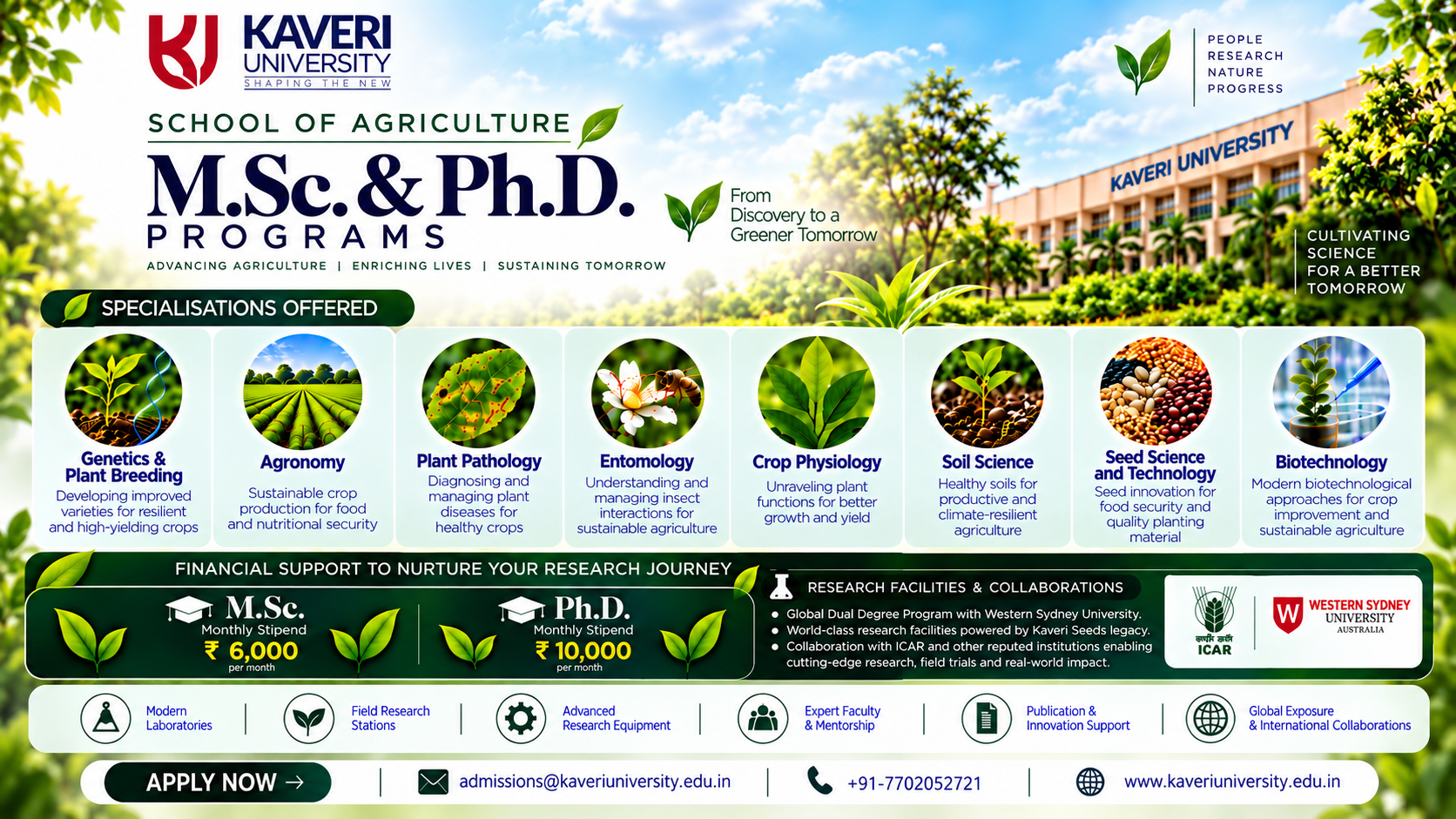
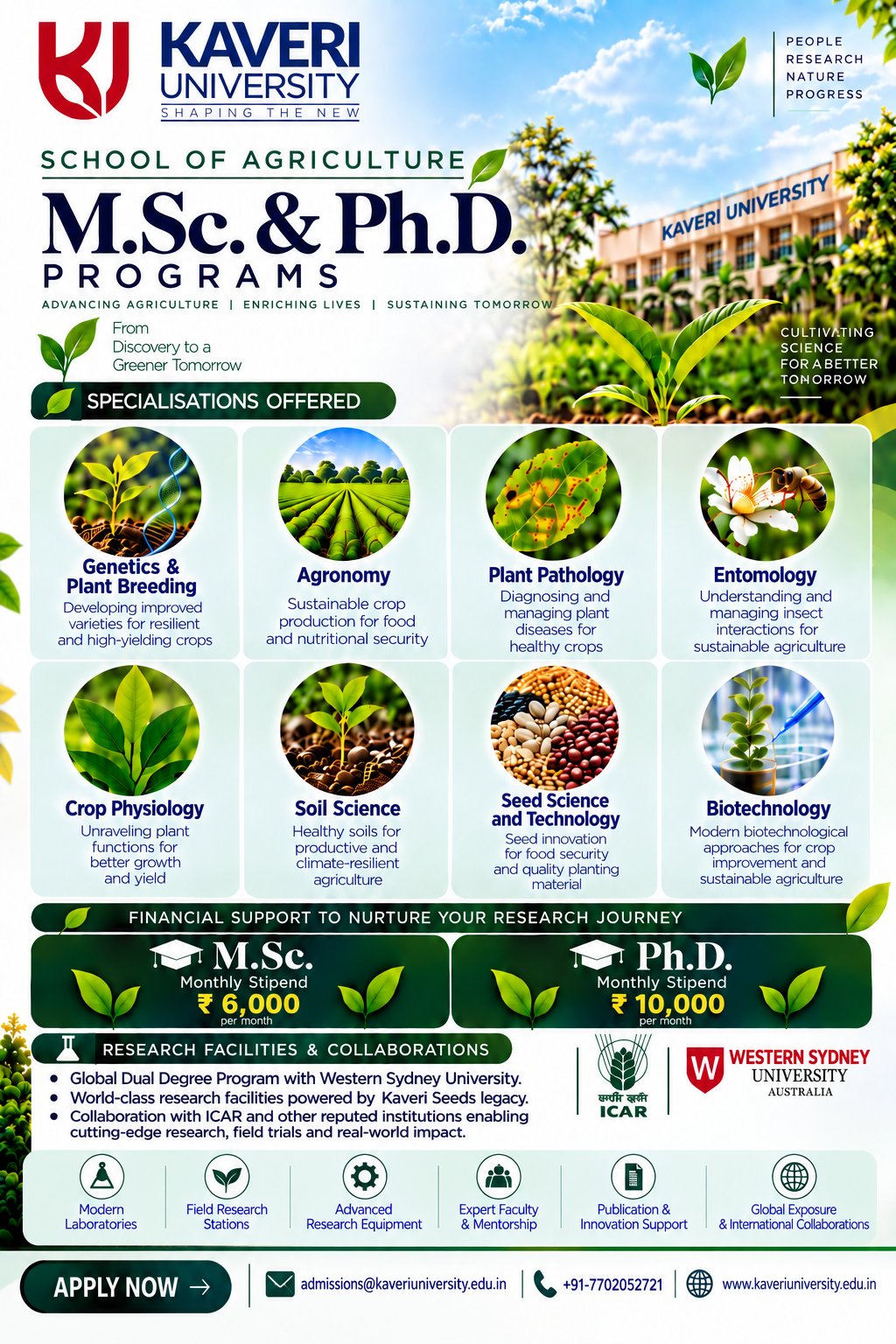
The university offers a specialized postgraduate programme (M.Sc. & Ph.D.) in Plant Physiology, designed to develop experts capable of understanding, analyzing, and enhancing the functional processes that govern crop growth, development, productivity, and resilience. This programme integrates advanced academic training with experiential learning, ensuring that students gain a comprehensive understanding of plant functioning under diverse environmental and management conditions.
A unique strength of the programme is its strong industry and R&D collaboration with Kaveri Seed Company, providing students with direct exposure to physiological screening, stress tolerance evaluation, seedling vigour analysis, canopy assessment, and field-based physiological research aligned with real-time breeding and agronomic trials. The curriculum further incorporates training in molecular studies of abiotic stress tolerance, including gene expression and stress signalling pathways; crop modelling for predicting growth and yield under climate variability; nutritional physiology in both field and hydroponic systems; and hormonal studies related to growth regulation and stress adaptation.
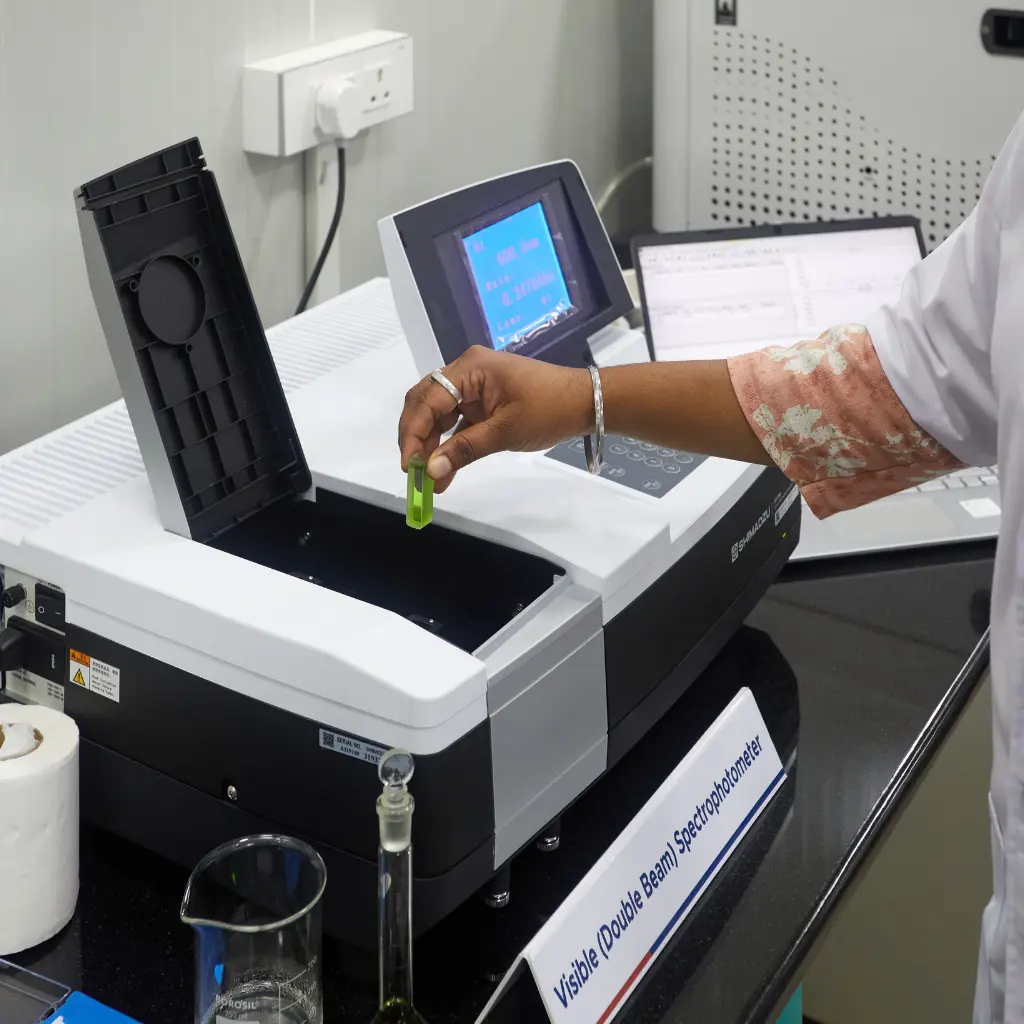
The curriculum covers both classical and modern physiological domains, including photosynthesis, respiration, nutrient uptake, stress physiology, hormone biology, crop productivity analysis, and modern phenomics. These are supported by advanced facilities such as growth chambers, gas exchange analysis systems, chlorophyll fluorescence analyzers, plant nutrient analyzers, soil–plant–water monitoring tools, and controlled-environment labs.
Global collaborations with research institutes and international universities further enhance learning through joint projects, training workshops, and exposure to emerging global trends such as climate-smart physiology, high-throughput phenotyping, and plant-environment interactions.
With a strong emphasis on innovation, sustainability, and climate-resilient agriculture, the postgraduate programme in Crop Physiology at Kaveri University prepares graduates for leadership roles in research, academics, agri-tech industries, and national and global agricultural organizations.
Covers advanced crop physiology topics including Plant Growth and Development, Photosynthesis and Productivity, Stress Physiology, Water and Nutrient Relations, Hormone Biology, Seed Physiology, Crop Modelling, Phenomics, and Climate-Resilient Agriculture.
M.Sc.: 2 years (4 semesters)
Ph.D.: 3 years (6 semesters)
To impart in-depth knowledge of plant physiological processes related to growth, development, and yield formation.
To train students in the study of stress physiology, plant-water relations, nutrient dynamics, and photosynthesis.
To develop skills in instrument-based analysis, including chlorophyll meters, IRGA, porometers, and growth chambers.
To promote research in physiological breeding, crop growth simulation, and resource-use efficiency.
To prepare students for interdisciplinary roles in research, extension, and AgriTech-based crop advisory systems.
To foster innovation in enhancing climate adaptability and improving the physiological efficiency of crops under diverse agro-ecological conditions.
Kaveri University's School of Agriculture offers a comprehensive Postgraduate Programme in Crop Physiology, emphasizing advanced scientific learning, practical experimentation, and innovative approaches to understanding plant function. The programme is designed to build strong conceptual and technical skills through laboratory training, field-based physiological assessments, controlled-environment studies, and collaborative research activities.
With a strong focus on skill development and experiential learning, students gain hands-on exposure to modern physiological tools, biochemical assays, stress evaluation techniques, phenomics platforms, and crop modelling systems. The programme integrates academic depth with industry-oriented applications, ensuring that learners are equipped to address contemporary challenges related to climate resilience, resource-use efficiency, and crop productivity enhancement.
This programme aims to foster leadership in physiological research and innovation, preparing postgraduate scholars with the scientific expertise, analytical abilities, and professional competencies required to excel in academia, research institutions, agri-biotech industries, seed companies, and policy-making sectors.
Summary of Credit Distribution Among Different Categories of the
Course (Credit Hours)
| Semester | Major Courses | Minor Courses | Supporting Courses | Common Courses | Seminar | Research | Total |
|---|---|---|---|---|---|---|---|
| I | 9 | 3 | 3 | 3 | -- | -- | 18 |
| II | 12 | 6 | -- | 2 | -- | -- | 20 |
| III | -- | -- | 3 | -- | 1 | 15 | 19 |
| IV | -- | -- | -- | -- | -- | 15 | 15 |
| Total | 21 | 9 | 6 | 5 | 1 | 30 | 72 |
Summary of Credit Distribution Among Different Categories of the
Course (Credit Hours)
| Semester | Major Courses | Minor Courses | Supporting Courses | Seminar | Research | Total |
|---|---|---|---|---|---|---|
| I | 7 | 6 | -- | -- | -- | 13 |
| II | 5 | -- | 5 | 1 | 3 | 14 |
| III | -- | -- | -- | 1 | 18 | 19 |
| IV | -- | -- | -- | -- | 18 | 18 | IV | -- | -- | -- | -- | 18 | 18 | IV | -- | -- | -- | -- | 18 | 18 |
| Total | 12 | 6 | 5 | 2 | 75 | 100 |
Note:
(i) Students getting admitted through entrance test mode need to have 60% or equivalent grade in 10+2 from any Statutory Board.
(ii) Exact cut-off rank would be announced upon declaration of results.
| Students Under Indian Category | ₹ Per Annum |
|---|---|
| Academic Fees< (All Inclusive Academic Fees)/td> | ₹ 3,00,000 |
| Hostel Fees (All Inclusive Hostel & Mess Charges) |
₹ 1,65,000 |
| Caution Deposit (Refundable at the end of study and graduation) |
₹ 20,000 |
| Students Under NRI/PIO/FO Category | $ USD Per Annum |
|---|---|
| Academic Fees | $5,000 |
| Hostel Fees (Includes Room & Mess Charges) |
$2,500 |
| Caution Deposit (Refundable at the End of the Course or After Graduation) |
$400 |
Refund Rules:
Fee Refund & Cancelation Policy will be as per guidelines published by UGC / Statutory Authorities.
Note:
Dates and schedules are subject to change.
Kaveri University was established as per the Telangana Private Universities (Establishment & Regulation) Act, 2018 under section 3.